What is Chinitsu? Riichi Mahjong's Full Flush Yaku
Chinitsu is the 6 han yaku (5 han when called) for a winning hand built entirely from a single number suit, with no honor tiles. It is the highest-value yaku outside yakuman, guaranteeing mangan-or-better with just one dora — but the hand is also the most visible at the table, because the discards betray the chosen suit from turn one.
What is chinitsu?
Chinitsu (清一色, "full flush" or literally "pure one color") is a riichi mahjong yaku for a hand made entirely of one numbered suit — all manzu, all pinzu or all souzu. The hand must contain zero honor tiles. Closed it is worth 6 han; open it is worth 5 han. Either value lands at the haneman tier with just one extra dora.
What are chinitsu's exact conditions?
Two rules: (1) every tile in the hand must come from the same numbered suit — even one off-suit tile or any honor tile breaks the yaku; (2) chinitsu loses 1 han when called open like ittsu and sanshoku-doujun. Unlike most open-downgrade yaku the open value (5 han) still pays haneman on its own, so calling for chinitsu is much more attractive than calling for ittsu.
Chinitsu vs honitsu — what is the difference?
Chinitsu requires the hand to be entirely within one numbered suit with zero honors; honitsu allows honor tiles in addition to one suit. Chinitsu is 6 han closed / 5 open — exactly twice the value of honitsu (3 han closed / 2 open). The trade-off: chinitsu is harder to build because you cannot rely on yakuhai honor triplets to anchor the shape — every meld must be a sequence or triplet within your chosen suit. A pure-suit hand that picks up a single honor tile downgrades from chinitsu to honitsu.
What yaku does chinitsu stack with?
Chinitsu combines freely with most yaku that do not require multiple suits or honor tiles. Common stacks: riichi (closed), pinfu (the same-suit sequences are ryanmen-friendly), iipeiko and ryanpeikou (two identical sequences inside one suit are entirely natural), ittsu (1-2-3 / 4-5-6 / 7-8-9 fits inside chinitsu trivially), tanyao (only when chinitsu uses 2-8 ranks — chinitsu + tanyao is the classic "all simples one suit" combo), and the triplet-heavy variants like sanankou or toitoi. Incompatible: honitsu (no honors allowed), sanshoku-doujun and sanshoku-doukou (multi-suit required), yakuhai (no honor tiles).
When should I commit to chinitsu?
The trigger is a starting hand heavily concentrated in one numbered suit — typically eight or more tiles of the same suit. Commit when (1) the off-suit and honor tiles can be shed cheaply over the first 4-5 turns, (2) the target suit still has live shapes (the connecting tiles are not heavily discarded — multi-way fights for the same suit often choke off chinitsu hands), and (3) you accept the visibility cost — your river will read as "all one suit" within five turns and savvy opponents will fold against you. Chinitsu's strength is raw value (haneman with one dora); its weakness is the open broadcast. Open hands at 5 han are still worth calling for, especially when an early pon or chi locks in the suit commitment cheaply.
Train the pattern
Look at each hand and decide before revealing the answer.
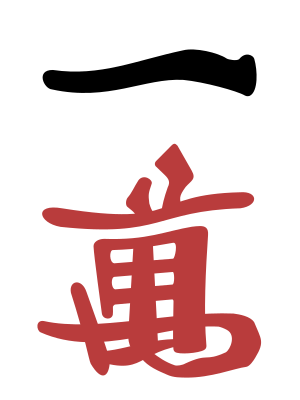
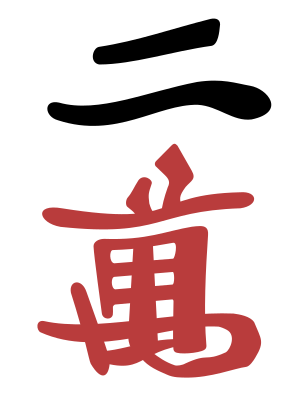
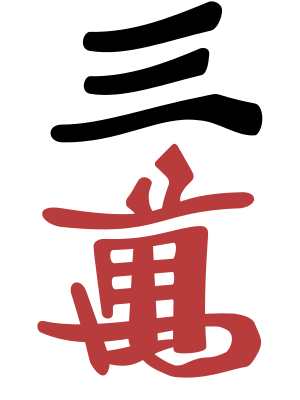
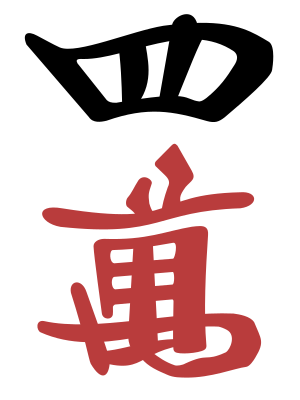
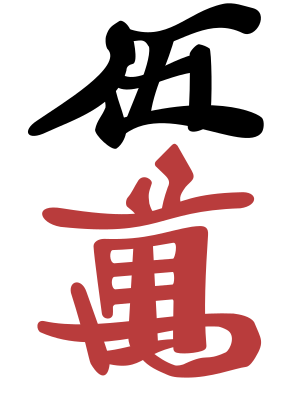
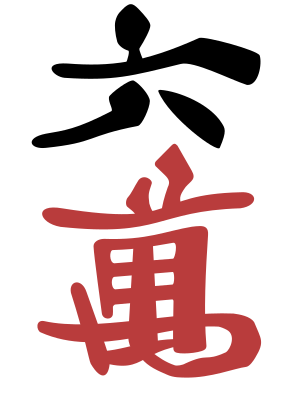
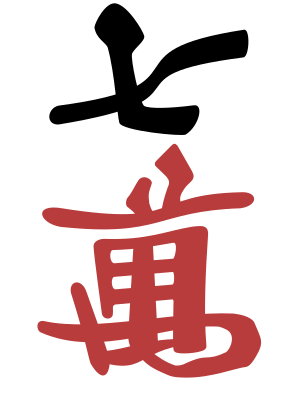
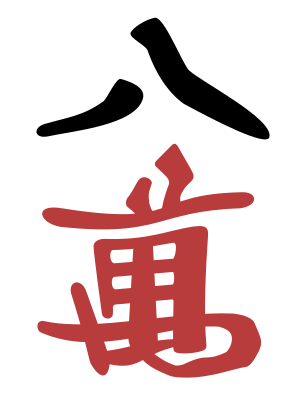
123m 456m 789m 234m 99m
Reveal answer
Every tile is manzu and the hand contains no honors. The shape is also a clean ittsu (1-2-3 / 4-5-6 / 7-8-9), so chinitsu + ittsu both score on this hand.
123m 456m 789m 234p 99m
Reveal answer
234p adds a pinzu sequence to an otherwise pure manzu hand. Chinitsu requires every tile to be from the same numbered suit. One off-suit meld breaks it.