What is Toitoi? Riichi Mahjong's All Triplets Yaku
Toitoi is the 2 han yaku for a winning hand built entirely from triplets (and/or kans) plus a pair — no sequences allowed. It pairs beautifully with yakuhai, honitsu and the concealed-triplet yaku, and half the high-value open hands you see at the table are built on it.
What is toitoi?
Toitoi (対々和, "all triplets") is a riichi mahjong yaku scored when the hand contains four triplets (or kans) and a pair — no sequences allowed. Worth 2 han open or closed, with no downgrade for calls. The name literally reads "pair-pair harmony" but the structure it describes is all triplets, not all pairs — chiitoitsu is the seven-pairs yaku.
What are toitoi's exact conditions?
Two rules: (1) every meld must be a triplet (koutsu) or a kan (kantsu) — no sequences (shuntsu) at all; (2) the standard four-melds-plus-pair structure applies. The asymmetric open-friendliness is the key strategic feature: toitoi does not downgrade when called open, which makes it one of the strongest yaku to build through pon. Concealed kans (ankan), open kans (daiminkan) and upgraded kans (shouminkan) all count toward toitoi the same way triplets do.
Toitoi vs chiitoitsu — what is the difference?
Both shape-defining yaku live in "no sequences" territory, but the structures are opposite. Chiitoitsu (七対子) uses seven pairs in a closed hand at a flat 2 han / 25 fu. Toitoi uses four triplets plus one pair in any closed-or-open hand at 2 han. A chiitoitsu hand never qualifies as toitoi (it has no triplets); a toitoi hand never qualifies as chiitoitsu (it has only one pair). They share "no sequences" but otherwise diverge in shape and call rules.
What yaku does toitoi stack with?
Toitoi combines freely with yaku that do not require sequences. Common stacks: yakuhai (a value-tile triplet often anchors the open shape — toitoi + yakuhai is a classic 3 han open hand), sanankou and suuankou (three or four concealed triplets layered onto toitoi's all-triplet shape — suuankou is yakuman), honitsu, chinitsu, honroutou (every triplet on yaochuu tiles), shousangen (with two dragon triplets and a dragon pair) and daisangen (yakuman). Incompatible: pinfu, iipeiko, sanshoku-doujun, ittsu, ryanpeikou — all require sequences.
When should I commit to toitoi?
The trigger is an early hand with multiple pairs forming — typically three or more pairs by turn 4-5. Commit when (1) you have a yakuhai option to anchor the open shape so calls produce real value, (2) the hand does not have a strong sequence-friendly alternative (you would forfeit pinfu or sanshoku for it), and (3) you accept that toitoi telegraphs as your pon calls accumulate. The open friendliness is toitoi's killer feature — most open hands lose 1 han to calls, toitoi does not. Combined with yakuhai it routinely reaches mangan without riichi.
Train the pattern
Look at each hand and decide before revealing the answer.
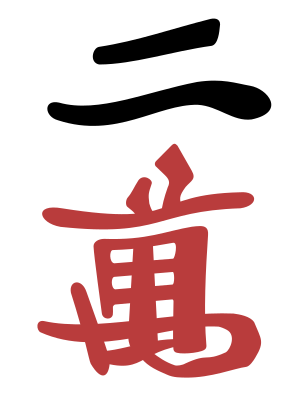
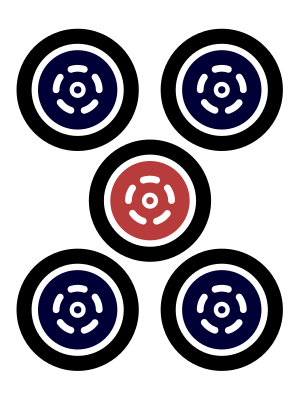
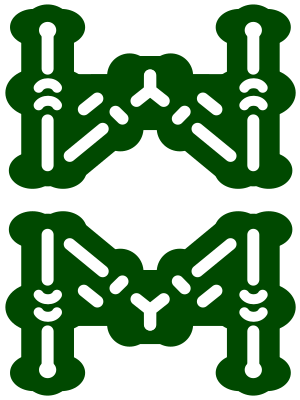
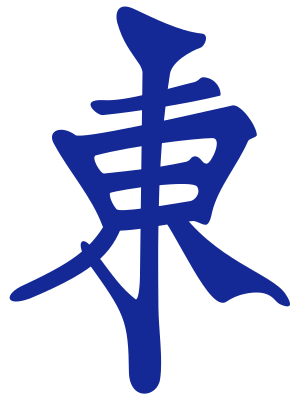
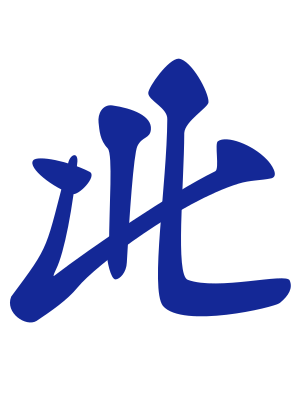
222m 555p 888s 444z 11z
Reveal answer
Four triplets (222m, 555p, 888s, 444z) plus an honor pair. No sequences anywhere — toitoi requires every meld to be a triplet (or kan). The 444z triplet also scores no yakuhai unless 4z (north) is round or seat wind for the player.
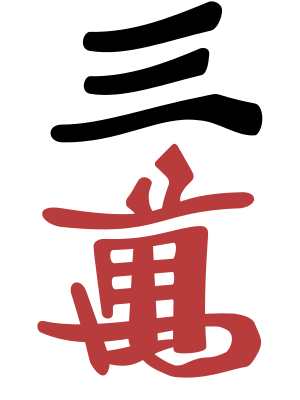
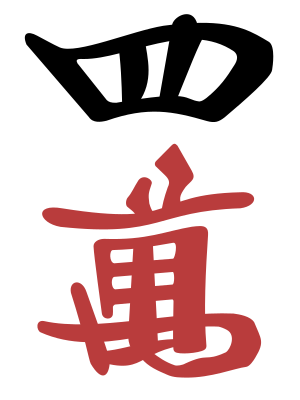
234m 555p 888s 444z 11z
Reveal answer
234m is a sequence. Toitoi forbids sequences outright — every meld must be a triplet or a kan. One sequence kills the yaku.
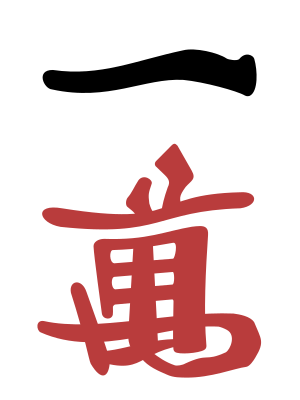


11m 22p 33s 44z 55z 66z 77z
Reveal answer
Seven pairs, not four triplets plus a pair. This hand scores chiitoitsu (2 han closed, flat 25 fu), not toitoi — the two yaku are mutually exclusive at the shape level.