Toitoi (All Triplets)
A hand made of four triplets (or kans) and a pair — no sequences. Often built from middle-game pon calls; pairs naturally with sanankou (three concealed triplets) and yakuhai for high-han open hands.
Read the full explainer →Example hand
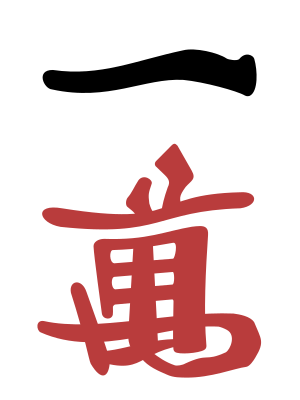
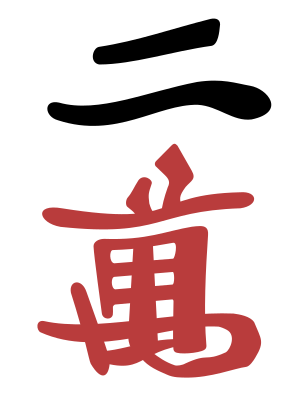
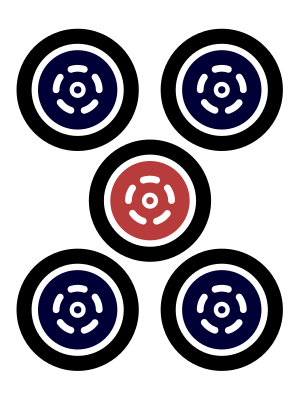


222m555p888s333z11m
Open in shanten calculator →Related yaku
Sanankou (Three Concealed Triplets)
2 HanA hand containing three concealed (un-called) triplets, regardless of the remaining structure. 2 han, open or closed — the call rule applies to the other meld and the pair, not to the three concealed triplets. One more concealed triplet upgrades the hand to suuankou yakuman.
Yakuhai (Value Tiles)
1 HanA triplet (or kan) of any dragon, the round wind, or the player's seat wind. Each qualifying triplet scores 1 han, and a triplet that doubles as both round-and-seat wind (renpuuhai) scores 2 under most rulesets. The simplest open-friendly yaku in the game.
Honitsu (Half Flush)
3 HanA hand containing only one numbered suit plus honor tiles. 3 han closed, 2 han open. The workhorse high-value open yaku — combined with a yakuhai triplet it routinely clears mangan even after multiple calls.
Suuankou (Four Concealed Triplets)
YakumanYakuman. Four concealed triplets in a closed hand. The fourth triplet must complete by tsumo to keep all four concealed — a ron win with a shanpon wait counts the winning triplet as open and downgrades the result to san ankou + toitoi instead.
Honroutou (All Terminals and Honors)
2 HanEvery tile is a terminal (1 or 9) or honor. 2 han. Since terminals and honors cannot form sequences, the hand always pairs with toitoi or chiitoitsu — the resulting stack is typically 4 han or more before dora.