Sanankou (Three Concealed Triplets)
A hand containing three concealed (un-called) triplets, regardless of the remaining structure. 2 han, open or closed — the call rule applies to the other meld and the pair, not to the three concealed triplets. One more concealed triplet upgrades the hand to suuankou yakuman.
Example hand
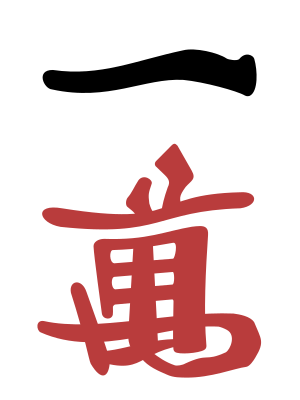
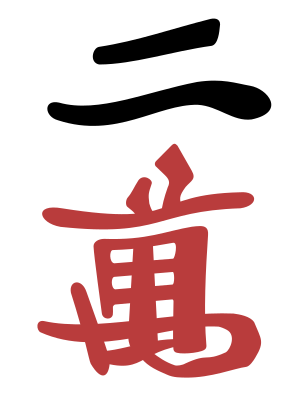
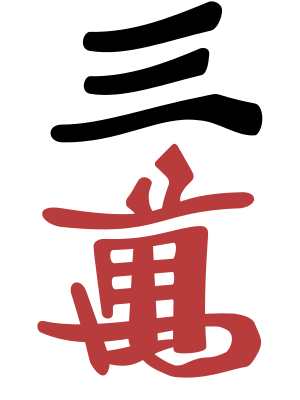
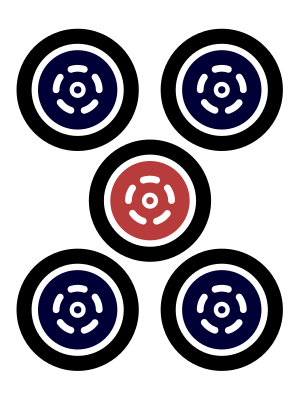

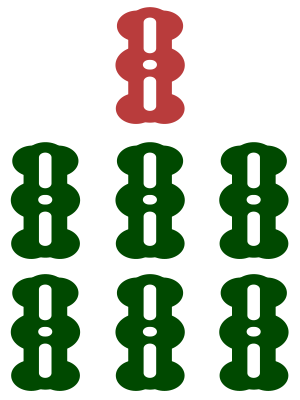
222m555p777s123m88p
Open in shanten calculator →Related yaku
Toitoi (All Triplets)
2 HanA hand made of four triplets (or kans) and a pair — no sequences. Often built from middle-game pon calls; pairs naturally with sanankou (three concealed triplets) and yakuhai for high-han open hands.
Suuankou (Four Concealed Triplets)
YakumanYakuman. Four concealed triplets in a closed hand. The fourth triplet must complete by tsumo to keep all four concealed — a ron win with a shanpon wait counts the winning triplet as open and downgrades the result to san ankou + toitoi instead.
Yakuhai (Value Tiles)
1 HanA triplet (or kan) of any dragon, the round wind, or the player's seat wind. Each qualifying triplet scores 1 han, and a triplet that doubles as both round-and-seat wind (renpuuhai) scores 2 under most rulesets. The simplest open-friendly yaku in the game.
Honroutou (All Terminals and Honors)
2 HanEvery tile is a terminal (1 or 9) or honor. 2 han. Since terminals and honors cannot form sequences, the hand always pairs with toitoi or chiitoitsu — the resulting stack is typically 4 han or more before dora.
Shousangen (Little Three Dragons)
2 HanTwo triplets and a pair of the three dragon tiles. 2 han for shousangen itself, plus 1 han for each dragon-triplet yakuhai — typically 4 han once the math settles. One pair short of daisangen yakuman, so a shousangen tenpai is always a yakuman threat.