Suuankou (Four Concealed Triplets)
Yakuman. Four concealed triplets in a closed hand. The fourth triplet must complete by tsumo to keep all four concealed — a ron win with a shanpon wait counts the winning triplet as open and downgrades the result to san ankou + toitoi instead.
Read the full explainer →Example hand
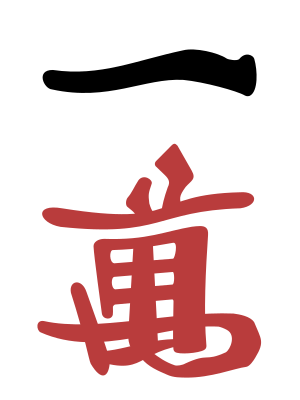
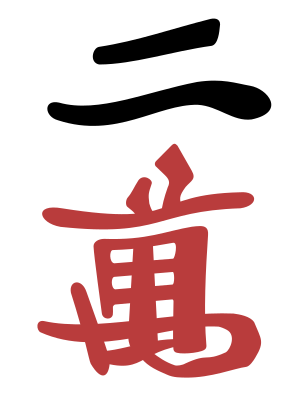
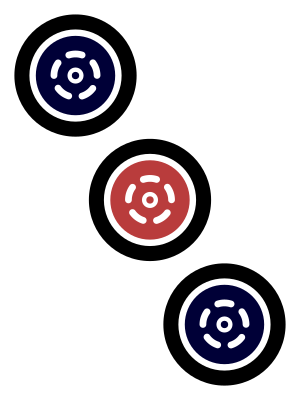
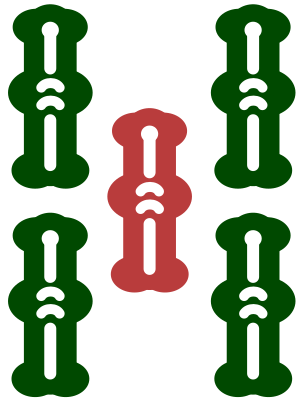
111m333p555s777z22m
Open in shanten calculator →Related yaku
Sanankou (Three Concealed Triplets)
2 HanA hand containing three concealed (un-called) triplets, regardless of the remaining structure. 2 han, open or closed — the call rule applies to the other meld and the pair, not to the three concealed triplets. One more concealed triplet upgrades the hand to suuankou yakuman.
Toitoi (All Triplets)
2 HanA hand made of four triplets (or kans) and a pair — no sequences. Often built from middle-game pon calls; pairs naturally with sanankou (three concealed triplets) and yakuhai for high-han open hands.
Kokushi Musou (Thirteen Orphans)
YakumanYakuman. All thirteen unique terminal-and-honor tiles, one of which is paired. The 13-way wait shape is one of the most defensive shapes in the game, and kokushi is the only yaku that can ron an ankan in most rulesets (chankan kokushi).
Daisangen (Big Three Dragons)
YakumanYakuman. Triplets (or kans) of all three dragon tiles — white, green and red. Often grown from a shousangen tenpai by upgrading the dragon pair into the third triplet. Open-friendly: most rulesets pay full yakuman regardless of calls.
Chuuren Poutou (Nine Gates)
YakumanYakuman. A closed flush of the form 1-1-1-2-3-4-5-6-7-8-9-9-9 in a single suit, plus any one of 1-9 of that suit. Mathematically a chinitsu by construction. The 9-way wait (junsei chuuren) pays double yakuman in stricter rulesets.