What is Ittsu? Riichi Mahjong's Pure Straight (1-2-3 / 4-5-6 / 7-8-9)
Ittsu (一気通貫) is the 2 han yaku for the three sequences 1-2-3, 4-5-6 and 7-8-9 all in a single number suit — a straight running 1 through 9. It is the same-suit cousin to sanshoku doujun: same 2 han value and same open downgrade, but built vertically inside one suit instead of horizontally across three.
What is ittsu?
Ittsu (一気通貫, "single straight through"; also spelled ikkitsuukan in full) is a riichi mahjong yaku for a hand that contains the three sequences 1-2-3, 4-5-6 and 7-8-9 all in the same numbered suit. Add one more meld of any shape and a pair to complete the hand. Closed it is worth 2 han; open it drops to 1 han.
What are ittsu's exact conditions?
Three rules: (1) the 1-2-3, 4-5-6 and 7-8-9 must all be in the same numbered suit — three manzu sequences, three pinzu or three souzu (honors cannot form sequences in the first place); (2) each sequence must stand on its own — a single tile cannot count for two sequences at once (a single 4 doing double duty in 234 and 456 is illegal); (3) the open downgrade applies to any call (pon, chi or kan, including ankan in most rule sets), so ittsu drops from 2 han to 1 han the moment the hand opens.
Ittsu vs sanshoku doujun — when do you commit to which?
Both yaku are 2 han closed, 1 han open, built from sequences — but the suit-direction is opposite. Ittsu is vertical: three sequences inside one suit. Sanshoku doujun is horizontal: the same sequence across three suits. Pick ittsu when your starting hand and early draws cluster in one suit (a 1m + 4m + 7m signal is the classic tell). Pick sanshoku when the spread is balanced (the same number appearing in two of the three suits early is the tell). The two cannot coexist by definition — ittsu needs single-suit clustering, sanshoku needs three-suit spread.
What yaku does ittsu stack with?
Ittsu combines freely with most yaku that do not exclude its single-suit, all-sequence shape. Common stacks: riichi, pinfu (the sequences are ryanmen-friendly), honitsu (very common — ittsu inside a single suit plus honor tiles for the extra meld and pair is a textbook ittsu + honitsu stack), chinitsu (rare but legal — ittsu plus another sequence and pair all in the same suit) and the dora family. Incompatible: tanyao (the 1 and 9 in ittsu always violate it), chanta and junchan (the 4-5-6 sequence has no terminal), toitoi (no sequences) and sanshoku-doujun (different shape).
When should I commit to ittsu?
The trigger is seeing low + mid + high range pieces in the same suit early: a 1-2 plus a 6-7 plus an 8-9 all in manzu is a fast signal. Commit when (1) at least two of the three ittsu pieces are already shaped, (2) the connecting tiles for the third piece are still live (not heavily discarded) and (3) you have a clear plan for the extra meld and pair without spreading thin. Open hands lose 1 han, so call only when ittsu is paired with another open-friendly yaku like honitsu or yakuhai. The fast-cheap alternative is to forget ittsu and play pinfu — a 1 han closed pinfu finishes faster than a 1 han open ittsu and avoids the call commitment.
Train the pattern
Look at each hand and decide before revealing the answer.
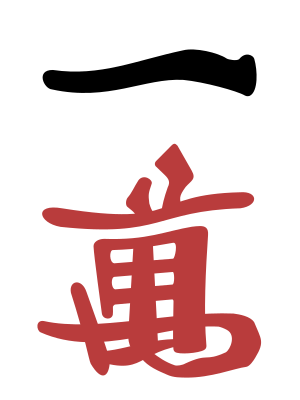
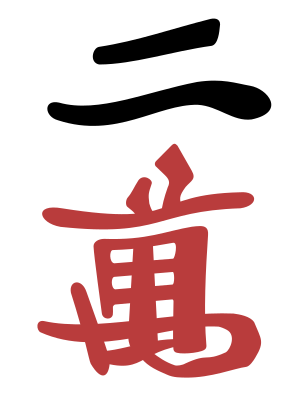
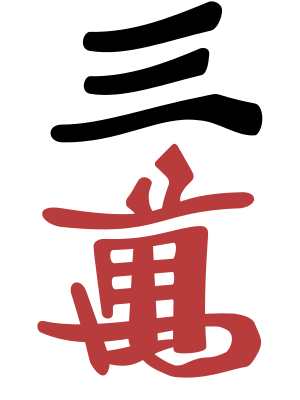
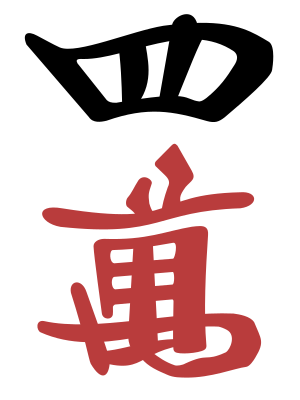
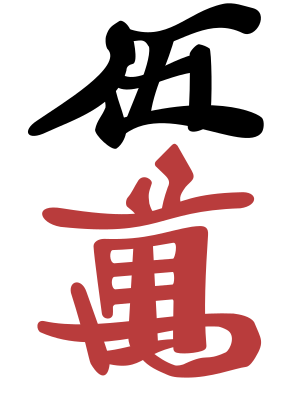
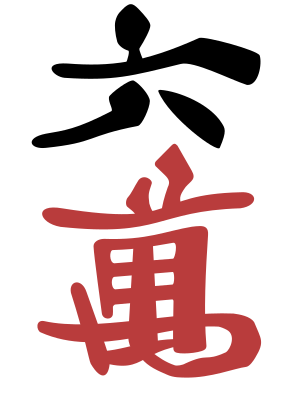
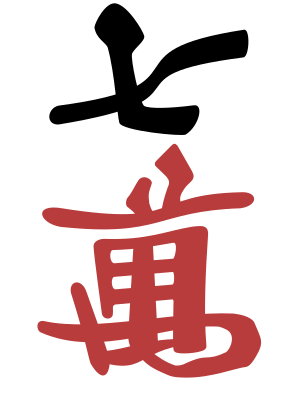
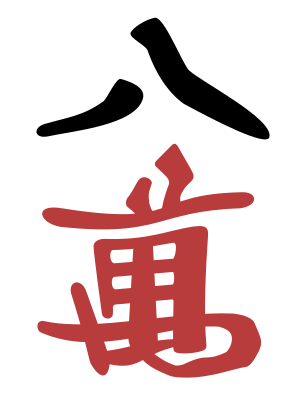
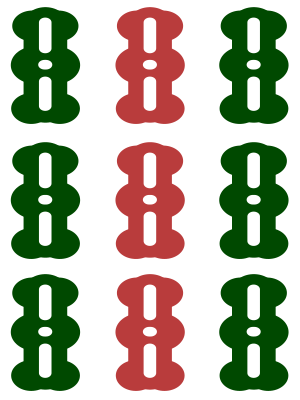
123m 456m 789m 234p 99s
Reveal answer
All three of 1-2-3, 4-5-6 and 7-8-9 appear in manzu, the same suit. The extra 234p sequence and 99s pair complete the hand. Open or closed, ittsu scores.
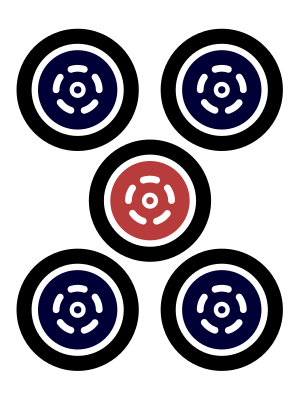
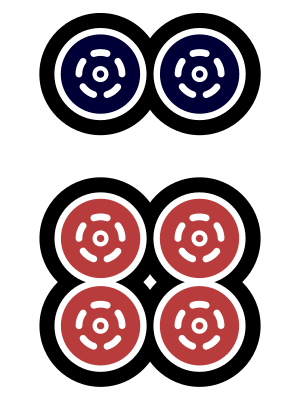
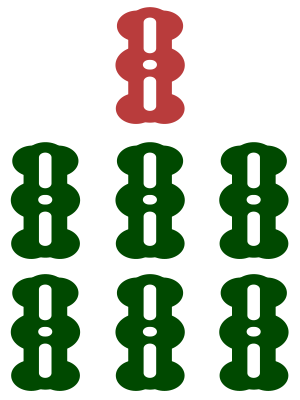

123m 456p 789s 234m 99s
Reveal answer
1-2-3, 4-5-6 and 7-8-9 are present but each in a different suit. Ittsu requires all three sequences to live inside one numbered suit. Cross-suit pieces simply do not qualify.
123m 456m 678m 234p 99s
Reveal answer
Manzu has 1-2-3 and 4-5-6 but the high piece is 6-7-8, not 7-8-9. Ittsu requires literally 7-8-9 — even a one-tile shift breaks the shape.