What is Honitsu? Riichi Mahjong's Half Flush Yaku Explained
Honitsu is the 3 han yaku (2 han when called) for a winning hand built from a single number suit plus any honor tiles. It is the workhorse open-hand yaku — flexible enough to absorb yakuhai triplets, valuable enough to threaten haneman, and easy to spot from the first few draws.
What is honitsu?
Honitsu (混一色, "half flush" or literally "mixed one color") is a riichi mahjong yaku for a hand composed of exactly one numbered suit plus any number of honor tiles. The hand must contain no tiles from the other two numbered suits. Closed it is worth 3 han; open it drops to 2 han. The "mixed" in the name refers to mixing one suit with honors — a hand of one pure suit and no honors is chinitsu, not honitsu.
What are honitsu's exact conditions?
Two rules: (1) every tile in the hand must be either from the chosen numbered suit (manzu, pinzu or souzu) or an honor tile (winds, dragons) — a single tile from another numbered suit breaks the yaku; (2) honitsu downgrades from 3 han closed to 2 han open like sanshoku-doujun and ittsu. Unlike most open-downgrade yaku, honitsu open still pays 2 han, which combined with a yakuhai triplet often clears the mangan line by itself.
Honitsu vs chinitsu — what is the difference?
Honitsu requires exactly one numbered suit plus honors; chinitsu (清一色, "full flush") requires the hand to be entirely within one numbered suit with zero honor tiles. Chinitsu is 6 han closed / 5 han open — twice the value of honitsu — but harder to build because you cannot use honor-tile yakuhai triplets to anchor the shape. A hand of "one suit + a yakuhai triplet" is honitsu; the same shape with the honors replaced by another sequence becomes chinitsu.
What yaku does honitsu stack with?
Honitsu combines freely with most yaku that do not exclude its mixed-suit-plus-honors shape. Common stacks: yakuhai (the most common companion — honor tiles in your hand often complete a yakuhai triplet for an extra han or two), ittsu (1-2-3 / 4-5-6 / 7-8-9 in your suit plus honor pieces), toitoi (all triplets including the honor ones), sanankou and shousangen (when the honors include two dragon triplets and a dragon pair), riichi when closed. Incompatible: chinitsu (no honors allowed), tanyao (honors and 1/9 excluded), sanshoku-doujun and sanshoku-doukou (multi-suit required).
When should I commit to honitsu?
The trigger is a starting hand concentrated in one numbered suit plus honor tiles — for example six pinzu and three honor tiles with only two off-suit "junk" tiles. Commit when (1) the off-suit tiles are early discards you can shed cheaply, (2) the honor tiles include a real or potential yakuhai for guaranteed value when open, and (3) the target suit still has live shapes (the connecting tiles are not heavily discarded). Honitsu's strength is open-friendliness — a 2 han floor plus a yakuhai triplet routinely hits 3+ han even after multiple calls, making it the most reliable high-value yaku for fast open play.
Train the pattern
Look at each hand and decide before revealing the answer.
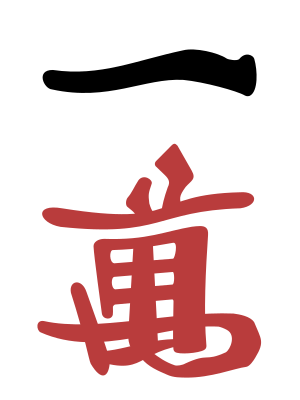
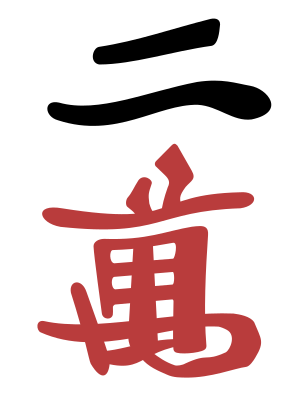
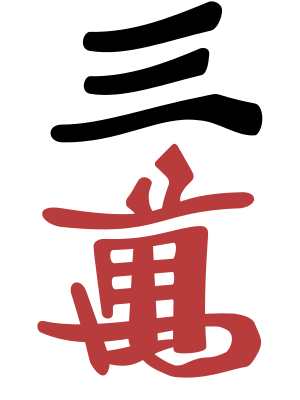
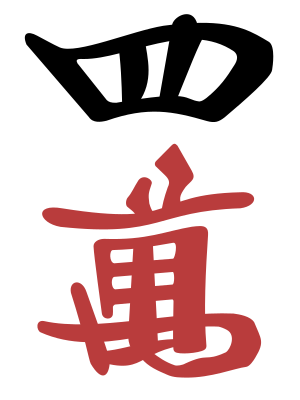
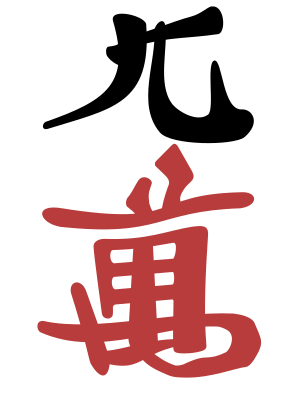
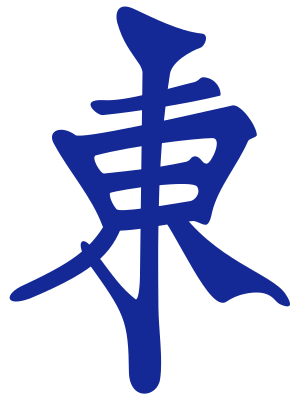
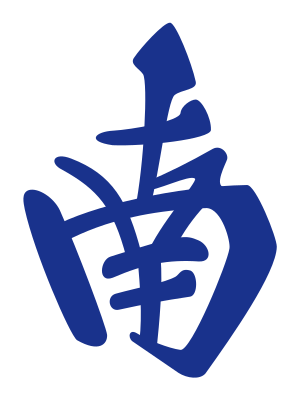
123m 456m 789m 111z 22z
Reveal answer
Every tile is either manzu or an honor. Honitsu requires exactly one numbered suit plus any honor tiles, and 111z is also a yakuhai triplet for any East-positioned player — this hand commonly scores honitsu + yakuhai together.
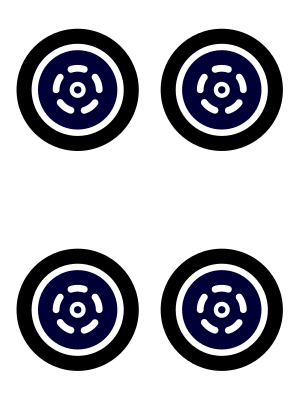
123m 456p 789m 111z 22z
Reveal answer
Manzu and pinzu both appear. Honitsu allows only one numbered suit plus honors. A single off-suit tile breaks the yaku.
123m 456m 789m 234m 99m
Reveal answer
Every tile is manzu and there are no honors. That is chinitsu (6 han closed), not honitsu — honitsu specifically requires the hand to contain at least one honor tile.