What is Chiitoitsu? Riichi Mahjong's Seven Pairs Yaku
Chiitoitsu is the 2 han closed-only yaku for a winning hand built from seven distinct pairs instead of the standard four melds plus a pair. It is the only legal hand structure that breaks the meld-based rule, and it carries a fixed 25 fu instead of the normal fu math.
What is chiitoitsu?
Chiitoitsu (七対子, "seven pairs") is a riichi mahjong yaku scored when a closed hand contains exactly seven pairs, all different tiles. It is the only valid hand shape outside the standard four-melds-plus-pair structure. Worth 2 han, closed-only — any call kills it outright. The hand scores a flat 25 fu regardless of every other fu consideration.
What are chiitoitsu's exact conditions?
Three rules: (1) the hand must be fully closed (menzen) — no calls of any kind, including ankan; (2) it must contain seven pairs, all of which are different tiles — most rulesets do not let two pairs of the same tile count as the chiitoitsu "two pairs" (a four-of-a-kind does not count as two chiitoitsu pairs); (3) the pairs may be any tile type — manzu, pinzu, souzu, winds, dragons — in any mix.
Why does chiitoitsu have a flat 25 fu?
Because the standard fu math assumes the four-melds-plus-pair structure that chiitoitsu does not have, the riichi rules bake in a flat 25 fu as a convention. The number sits between pinfu's 20 and most hands' 30, reflecting that chiitoitsu is structurally different but not especially fu-rich. There is no ron-vs-tsumo distinction, no triplet bonus, no wait shape bonus — chiitoitsu always rounds to exactly 25 fu for scoring.
What yaku does chiitoitsu stack with?
Chiitoitsu combines with yaku that respect its all-pairs, no-triplet shape. Common stacks: riichi and double-riichi (the most frequent partners — chiitoitsu is closed-only anyway), tanyao (when all seven pairs sit on 2-8 ranks), honitsu (one suit plus honors), chinitsu (one suit, no honors), honroutou (all seven pairs are terminals or honors), tsuuiisou (all seven pairs are honors — a yakuman by itself). Incompatible: pinfu (requires four sequences), toitoi (requires four triplets), sanshoku-doujun, ittsu, iipeiko, and ryanpeikou (most rulesets score a chiitoitsu-shaped hand that qualifies for ryanpeikou as ryanpeikou alone, not as chiitoitsu + ryanpeikou).
When should I commit to chiitoitsu?
The trigger is a starting hand with many isolated tiles and at least three pairs by turn 4-5. The standard form needs four melds plus a pair (eight building blocks total), but chiitoitsu only needs seven pairs — every tile that does not fit a sequence or triplet under standard might still grow into a pair under chiitoitsu. Commit when (1) your hand has 3+ pairs early, (2) honor tiles are abundant (they pair more easily than they triplet) and (3) the standard form has no obvious sequence backbone. The shanten calculator computes the chiitoitsu shanten separately — a hand that is 3-shanten standard but 1-shanten chiitoitsu is a clear signal to pivot.
Train the pattern
Look at each hand and decide before revealing the answer.
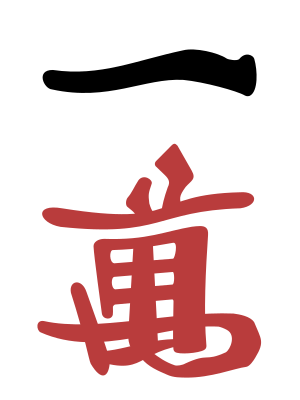
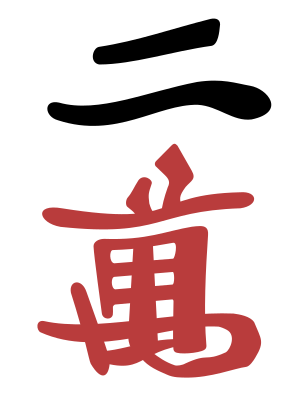
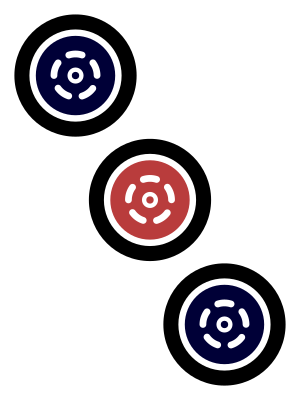
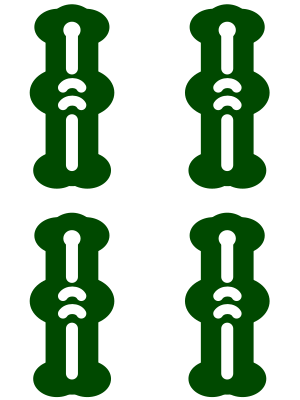

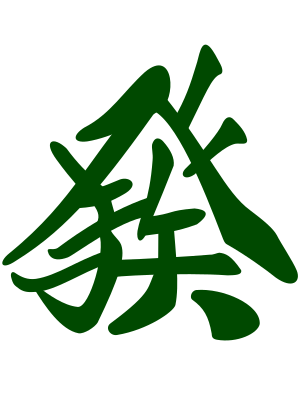
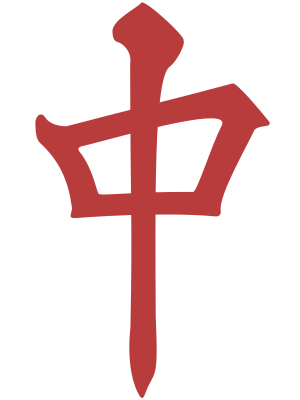
11m 22m 33p 44s 55z 66z 77z
Reveal answer
Seven distinct pairs across manzu, pinzu, souzu and honors. Chiitoitsu requires exactly seven pairs of all different tiles in a closed hand, scoring 2 han / 25 fu. Any call would kill it.
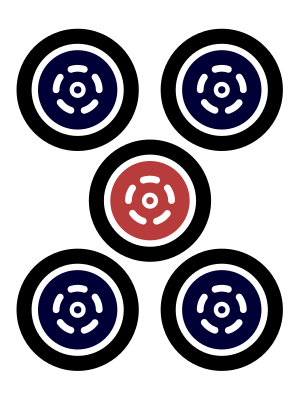
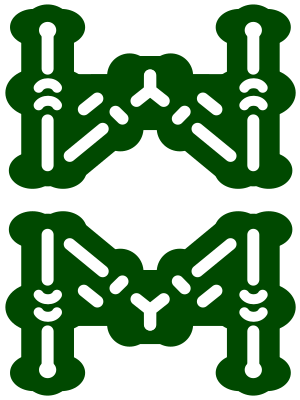
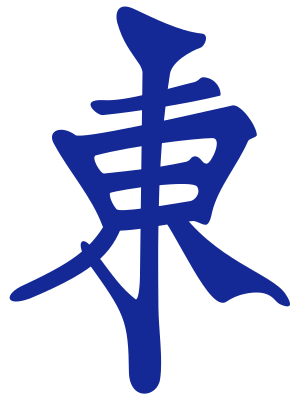
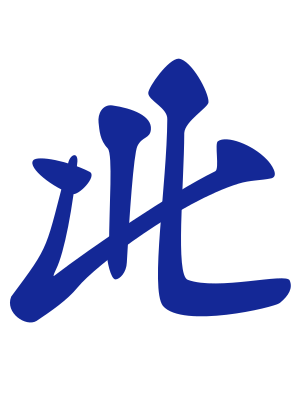
222m 555p 888s 444z 11z
Reveal answer
Four triplets plus one pair is the toitoi shape, not seven pairs. Chiitoitsu and toitoi are structurally opposite — every chiitoitsu has zero triplets, every toitoi has only one pair.