Tsuuiisou (All Honors)
Yakuman. A hand composed entirely of honor tiles — winds and dragons only. Often built around a chiitoitsu shape because honors form pairs more easily than triplets. Stacks with honroutou and (sometimes) shousangen for double yakuman in stricter rulesets.
Read the full explainer →Example hand
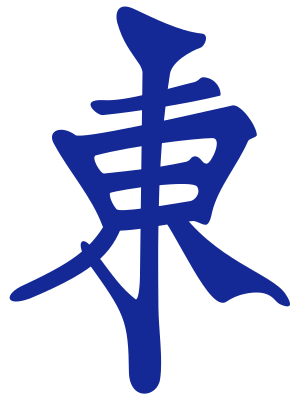
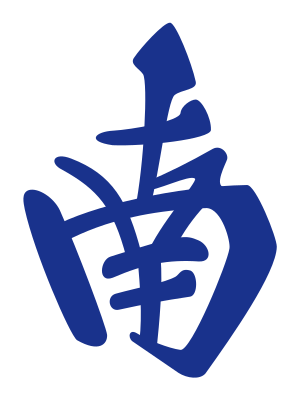
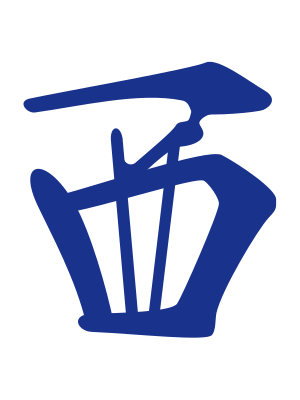
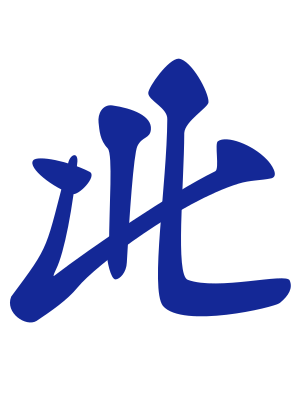

111z222z333z444z55z
Open in shanten calculator →Related yaku
Honroutou (All Terminals and Honors)
2 HanEvery tile is a terminal (1 or 9) or honor. 2 han. Since terminals and honors cannot form sequences, the hand always pairs with toitoi or chiitoitsu — the resulting stack is typically 4 han or more before dora.
Daisangen (Big Three Dragons)
YakumanYakuman. Triplets (or kans) of all three dragon tiles — white, green and red. Often grown from a shousangen tenpai by upgrading the dragon pair into the third triplet. Open-friendly: most rulesets pay full yakuman regardless of calls.
Kokushi Musou (Thirteen Orphans)
YakumanYakuman. All thirteen unique terminal-and-honor tiles, one of which is paired. The 13-way wait shape is one of the most defensive shapes in the game, and kokushi is the only yaku that can ron an ankan in most rulesets (chankan kokushi).
Chiitoitsu (Seven Pairs)
2 HanA closed hand of exactly seven distinct pairs. The seven pairs must all be different tiles — duplicates of the same pair count as one. Scores a flat 25 fu and pairs well with honor-heavy or mixed-suit hands that resist forming triplets.
Shousangen (Little Three Dragons)
2 HanTwo triplets and a pair of the three dragon tiles. 2 han for shousangen itself, plus 1 han for each dragon-triplet yakuhai — typically 4 han once the math settles. One pair short of daisangen yakuman, so a shousangen tenpai is always a yakuman threat.