Yakuhai (Value Tiles)
A triplet (or kan) of any dragon, the round wind, or the player's seat wind. Each qualifying triplet scores 1 han, and a triplet that doubles as both round-and-seat wind (renpuuhai) scores 2 under most rulesets. The simplest open-friendly yaku in the game.
Read the full explainer →Example hand
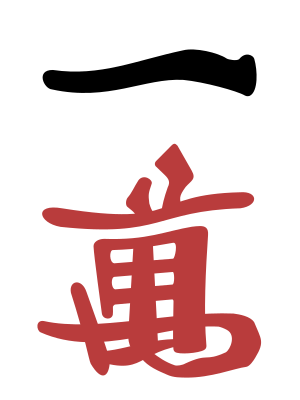
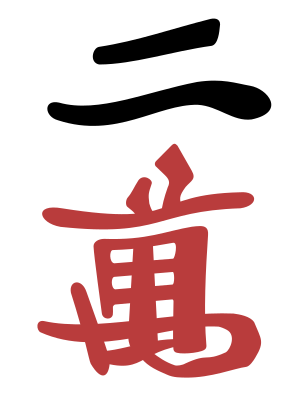
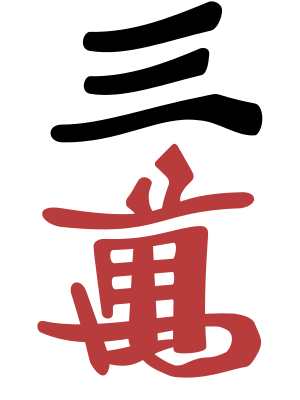

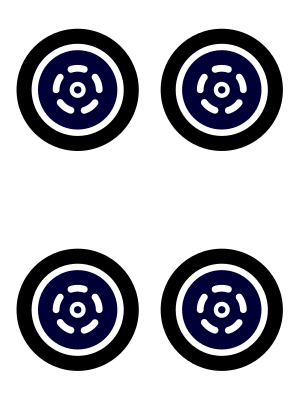
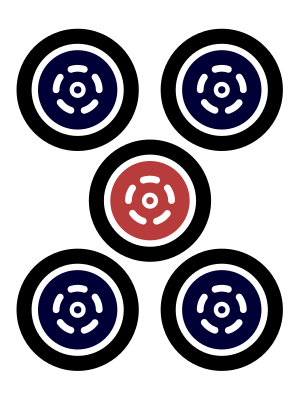
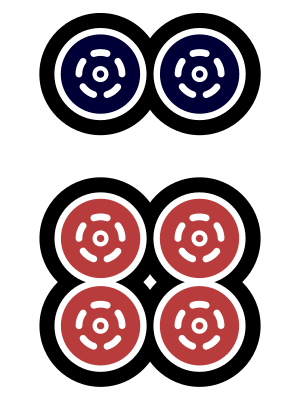
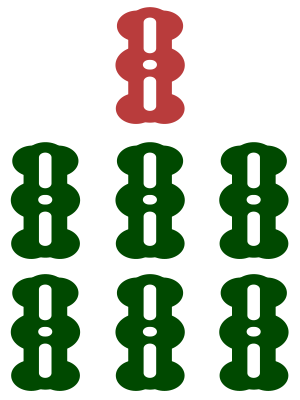

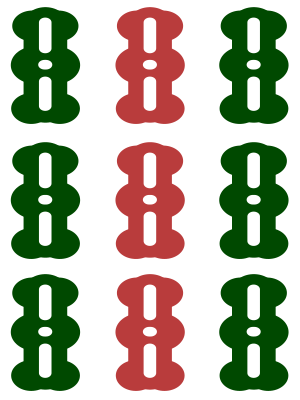

123m456p789s555z22p
Open in shanten calculator →Related yaku
Shousangen (Little Three Dragons)
2 HanTwo triplets and a pair of the three dragon tiles. 2 han for shousangen itself, plus 1 han for each dragon-triplet yakuhai — typically 4 han once the math settles. One pair short of daisangen yakuman, so a shousangen tenpai is always a yakuman threat.
Daisangen (Big Three Dragons)
YakumanYakuman. Triplets (or kans) of all three dragon tiles — white, green and red. Often grown from a shousangen tenpai by upgrading the dragon pair into the third triplet. Open-friendly: most rulesets pay full yakuman regardless of calls.
Toitoi (All Triplets)
2 HanA hand made of four triplets (or kans) and a pair — no sequences. Often built from middle-game pon calls; pairs naturally with sanankou (three concealed triplets) and yakuhai for high-han open hands.
Honitsu (Half Flush)
3 HanA hand containing only one numbered suit plus honor tiles. 3 han closed, 2 han open. The workhorse high-value open yaku — combined with a yakuhai triplet it routinely clears mangan even after multiple calls.
Chanta (Outside Hand)
2 HanEvery meld and the pair contains at least one terminal or honor tile. 2 han closed, 1 han open. Sequences are restricted to 1-2-3 and 7-8-9 — the only ones containing a terminal. Junchan is the honor-free 3 han version.