Sanshoku Doujun (Three-Color Straight)
The same numerical sequence in all three numbered suits (e.g., 234m / 234p / 234s). 2 han closed, 1 han open. Often paired with pinfu or tanyao, and structurally exclusive with ittsu — pick one or the other based on whether your early draws cluster vertically or spread horizontally.
Read the full explainer →Example hand
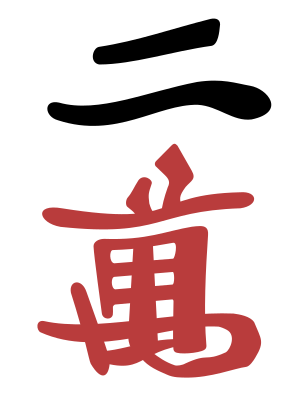
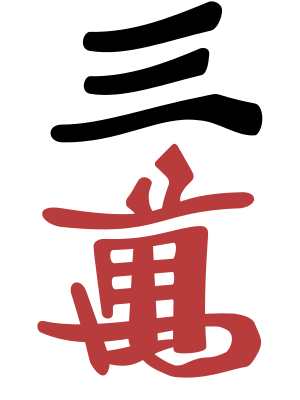
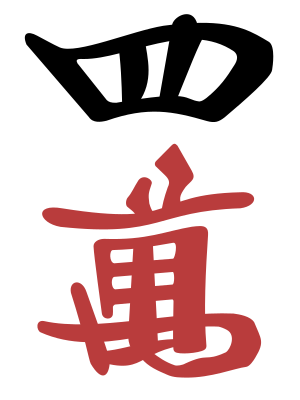
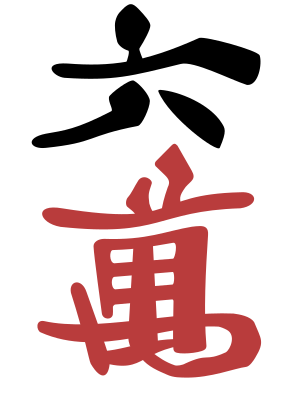
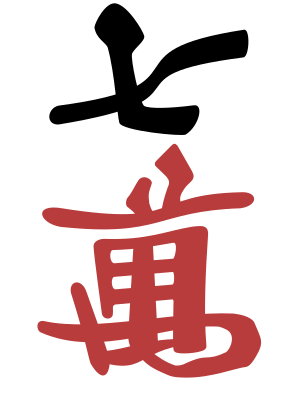
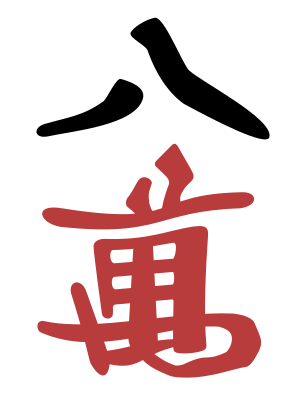
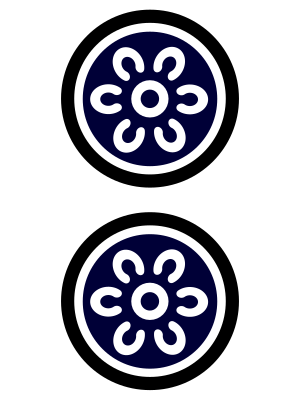
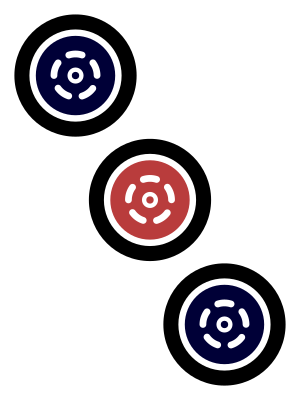
234m234p234s678m99s
Open in shanten calculator →Related yaku
Ittsu (Pure Straight)
2 HanSequences 1-2-3, 4-5-6 and 7-8-9 all in a single suit. 2 han closed, 1 han open. The same-suit cousin to sanshoku-doujun — vertical inside one suit versus sanshoku's horizontal three-suit spread, and the two cannot coexist.
Iipeiko (Pure Double Sequence)
1 HanTwo identical sequences (e.g. two 234m) in the same suit, in a closed hand. 1 han, closed-only — any call kills it outright. Replaced by ryanpeikou (3 han) when the hand contains two such pairs of identical sequences.
Pinfu
1 HanA closed hand of all sequences, with a non-yakuhai pair and a two-sided (ryanmen) wait. Adds zero fu beyond the base — pinfu tsumo stays at 20 fu, pinfu ron rounds to 30. The high-frequency partner of riichi and tanyao in closed-attack templates.
Tanyao (All Simples)
1 HanA hand containing no terminals (1s, 9s) and no honor tiles — only 2-8 of suits. 1 han, open or closed under modern kuitan rules; strict rulesets still require menzen. The workhorse open yaku, easy to lock in whenever the early hand is heavy on middle tiles.
Junchan (Pure Outside Hand)
3 HanLike chanta but contains no honors — every meld and the pair contains a terminal (1 or 9). 3 han closed, 2 han open. Higher value than chanta but brittle: a single honor tile anywhere in the shape downgrades the hand to chanta.